Haines Hunter - The Haines Family Legend
The Haines Brothers
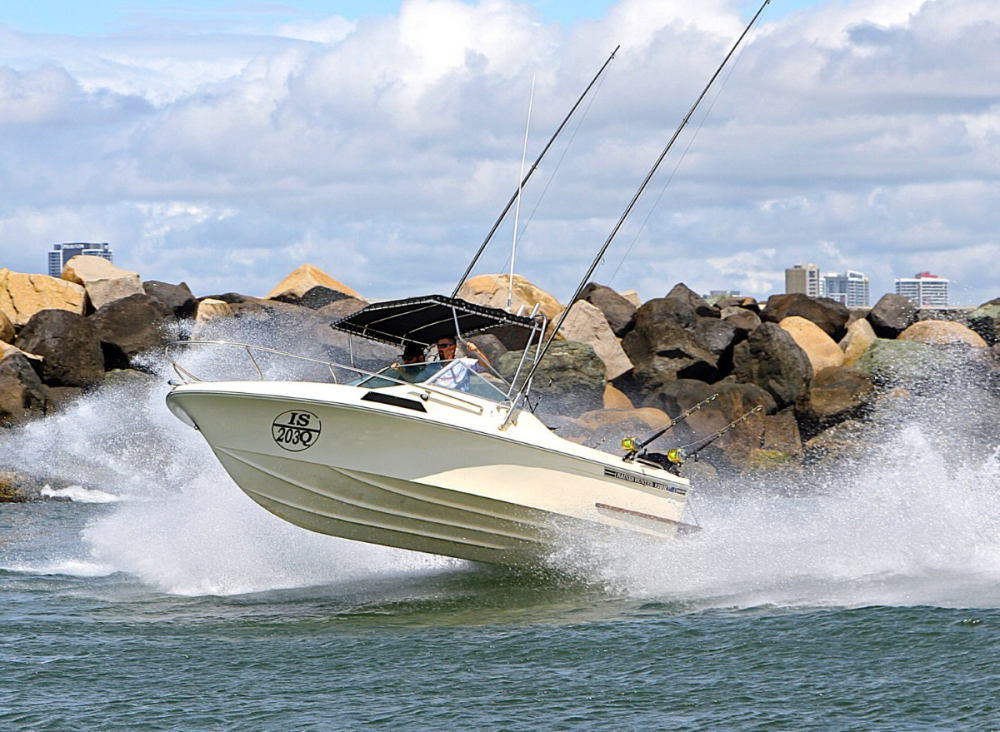
John and Garry Haines were Australian boating innovators with the guts and determination to succeed. They were instrumental in the development of Australian powerboat design and construction, testing new materials and techniques to the limits in practice, not theory. They enjoyed a reputation for their powerboat racing conquests, particularly during the heyday of the nineteen sixties and seventies. As the years fly by, their status in Australian boating lore has only heightened, placing them with the firm Aussie title of "Legends!"
During the late 1950's and early 60's new ideas and designs were being developed by America’s Offshore racing entrepreneurs like Don Aronow, and Dick Bertram and their close association with Naval Draftsman C. Raymond Hunt. Dick and Ray’s famous “Lucky Moppie” and “Surfrider” hulls were a part of the “Deep V” revolution that competed with parallel inspirations from the developing Thunderbird, Donzi, Scarab, USA Sports, Cigarette, and Formula powerboat companies. John Haines Snr looked up to these designs; however, the main inspiration for his design came from the offshore racing and endless weekend testing that he did along with brother Garry, and in later years, his two sons, John Jnr and Gregory.
With this, the brothers Haines started a historic tradition of premium Australian boating. In over 60 years of devotion, the Haines family DNA boats have also reached legend status. John would often say, “It is not our job to produce boats to take people out to sea, but to design boats that will bring them back again and again.”
Founders of the original Queensland-based company, brothers John (Snr) and Garry Haines, began making boats in a backyard workshop as far back as 1959. While times have changed, and so have the owners and designers, over 60 years of Australian tradition are in every Haines family product.
Haines Hunter Boats
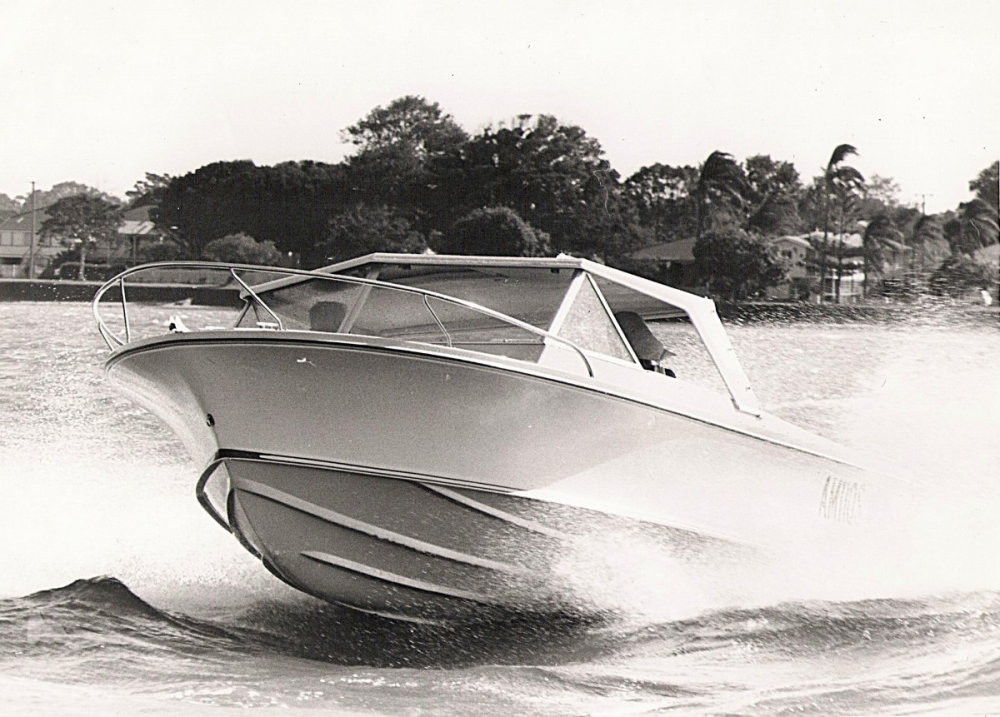
The original Haines Hunter Company is said to have officially formed in 1966 from the former Fibreglass Constructions Pty Ltd. Since then, Haines family boats have achieved a reputation for quality that others strive to achieve. It's not only the riding quality that makes a Haines; it’s the quality of the construction combined with modern internal layouts that make these hulls functional and extremely attractive.
Haines family boats manufactured their reputation with deep V fibreglass hulls that started with original American Bertram 12 and 14’ hulls that advanced traditional boatbuilding skills. However, over the years, they have also produced twin hull, aluminium and some interesting cathedral hulled bowriders that are regaining popularity in today’s market. Haines boats always utilise premium construction processes, with plenty of reinforced fibreglass in the strong hulls. That is why old boats like the V17L are as popular today as they were on first release over fifty years ago.
The Haines family has endured many trials and tribulations, including floods, fires, global economic crashes, ownership takeovers and management buyouts. The Haines family have had no involvement in the Haines Hunter brand since 1980, when there was a controversial takeover of the successful company by investors. In the following years, John Snr and family started the successful Haines Signature brand in 1984, and the Haines Group continues with its own success.
The debate rages on every boating and fishing forum, ramp, angling club, and wherever boaties gather about which are the best old-school models. One thing is for sure: they are all premium boats with excellent riding characteristics, combining comfort with technology to maximise your pleasure and safety on the water.
Note - Much of the information for this article and timeline was compiled from an interview with Garry Haines in 2011.
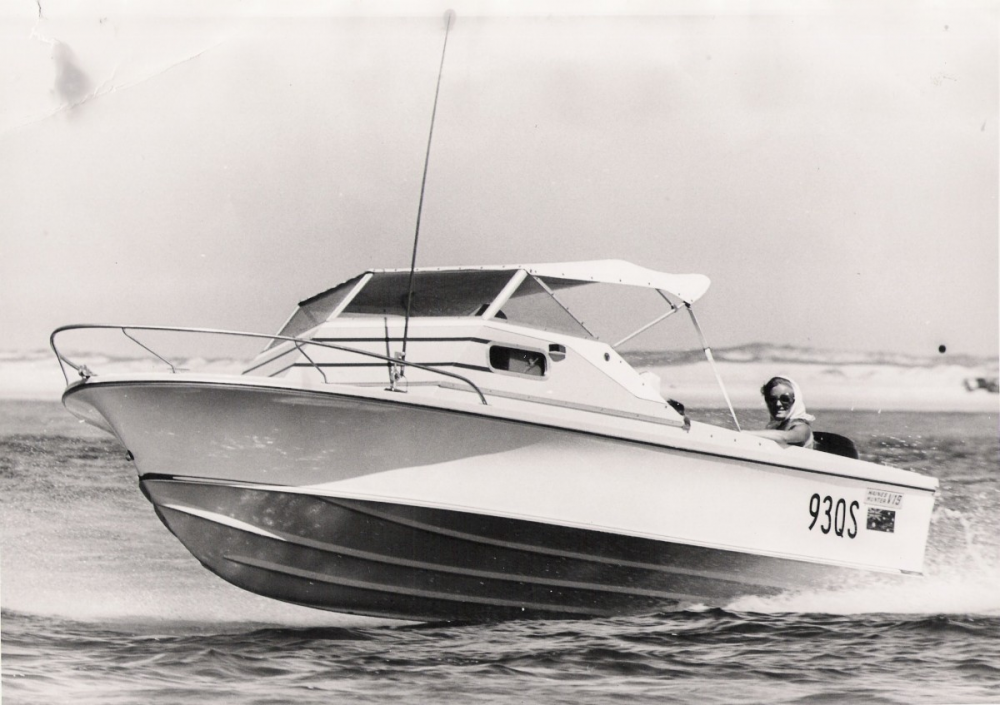
Timeline
-
Late 1950s: The fibreglass Deep V hull was developed in the American Offshore racing scene. Richard Bertram, a yacht broker from Miami, commissioned C. Raymond Hunt, a naval architect, to design the original Bertram 30’ “Moppie. “This boat was named after Bertram's wife.
-
1959: John and Garry Haines built their first fibreglass speedboat.
-
1960: Jim Wynne skippered a 23’ timber version of the Hunt design. It was the only boat other than Richard Bertram's Moppie to finish the 1960 Miami to Nassau race. Richard Bertram won the race. For the 1961 race, the 30’ timber hull design was converted to fibreglass and lengthened to 31’.
-
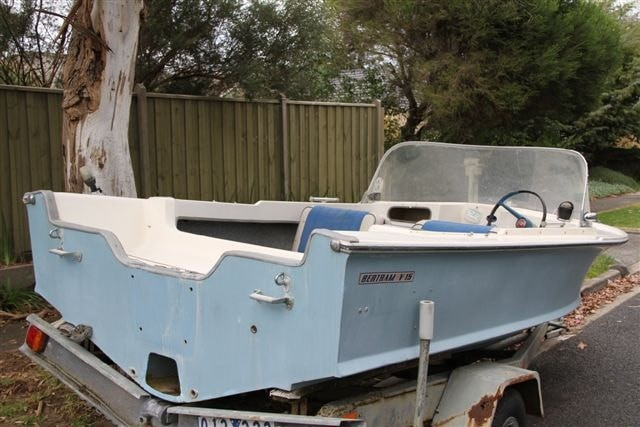
Early 1960's: Cam Craigie and Peter Huybers of QPS (Queensland Pastoral Supply) secured rights from Toronto Yacht and Boat Centre, Canada, to produce 12’, 14’, and 18’ boat models. They imported these models starting in 1960/61, later adding the 16’. The Haines brothers manufactured these boats for the Bertram Boat Company Australia, owned by Craigie and Huybers. The initial 12’, 14’, and 18’ models used the patented "Hunt Hydrolift" hull design. The 12’ and 14’ boats also featured a patented tunnel hull construction akin to designs by Barcrusher and Surtees. These boats had reverse chine designs with flared bows needing split mould construction. With deep V bottoms and broad beams, they had larger volumes than comparable narrow, flat-bottomed boats. Consequently, their lengths were measured around the gunwale rather than the centreline.
Thus, the original hulls evolved from:
-
V12’ – V133 – Sea Wasp
-
V14’ – Hunt or Bertram V15
-
V18’ – V19R – Countless offspring
-
Formula 233 – countless offspring.
-
-
1964: Archie Spooner of International Marine (Caribbean, Pride and Cavalier Yachts) negotiated the rights to produce the Bertram Yacht Co range from Richard Bertram in Miami, and immediately imported a 25’ Hardtop version to be driven by Bob Dyer (famous game fisherman and game show host) in the inaugural Sydney to Newcastle powerboat race. Both Dyer and the Haines brothers failed to finish, and the race was won by the infamous “Gelignite Jack” Murray in a Haines-built boat.
-
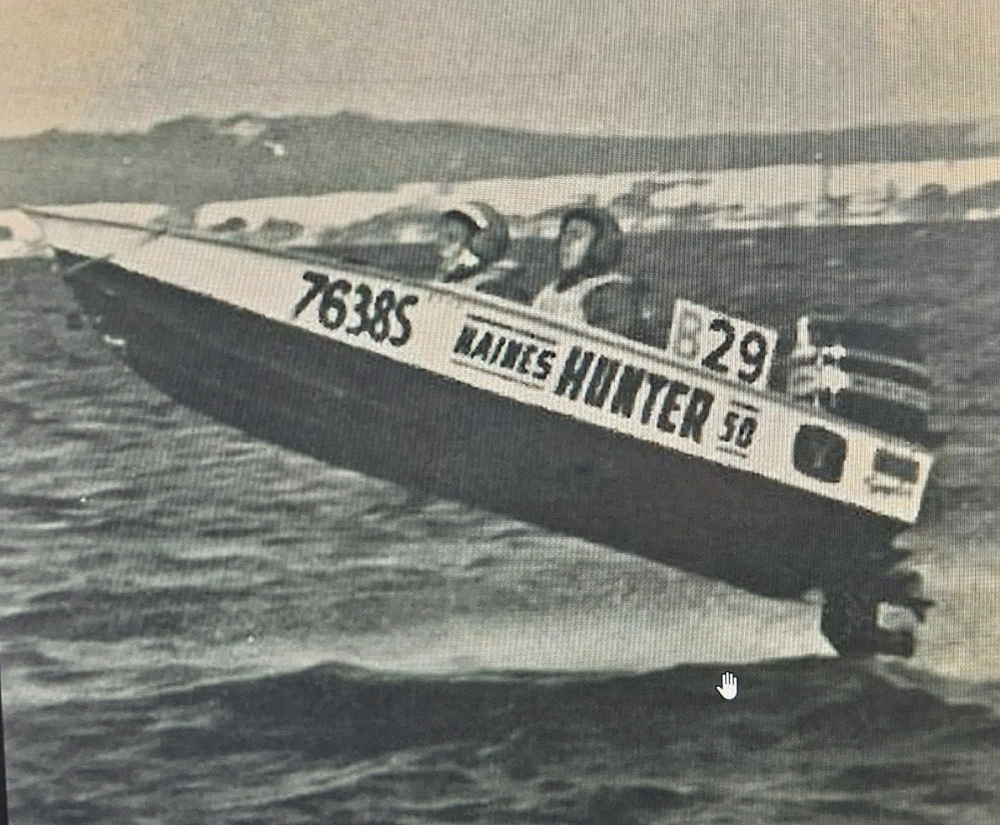
1965: Throughout the 1960s and 1970s, the Haines brothers maintained an exhaustive offshore and ski racing program, including the Cairns-Gold Coast Pacific 1000. Garry Haines describes their greatest win as the 1965 Sydney/Newcastle Race in a V19R, but also fondly remembers wins in the Sydney to Newcastle, Bridge to Bridge Ski-Races on the Hawkesbury River and Port Phillip Bay ocean and ski boat races.
-
1966/67: QPS, Cam Craigie and Peter Huyber’s “Bertram Boat Company Australia” had lost interest in boats and a dispute over the Bertram name was successfully settled with Archie Spooner (International Marine) taking the total rights to the name Bertram in Australia. John and Garry had wanted to move on with their own brand, recognising both tradition and their own racing success. Hence, the development of the name Haines Hunter attributed the original DNA through C. Raymond Hunt and the patented Hunt Hydrolift hulls 12, 14 and 18’ in the mid-60s.
-
Late 1960s/early 70s: The Canadian pattern 16’ Bertram was imported. Being an earlier version than the 14’ and 18’, it closely resembled the original Moppie design. John modified the strakes and chines to remove the need for split moulding and gave the hull a more hollow flare. This marked John's initial design change, leading to the development of the successful V17 MkI. It boosted his confidence as a designer. "The V17L was known affectionately as the executive model. During an economic downturn, John Sr decided that the 'shiny bums' – referring to executives or office workers – would get hands-on experience by producing the latest model. The model became a notable success with a longstanding reputation for innovation and performance. John's strategy of developing products through economic downturns has served him well multiple times," according to Garry Haines.
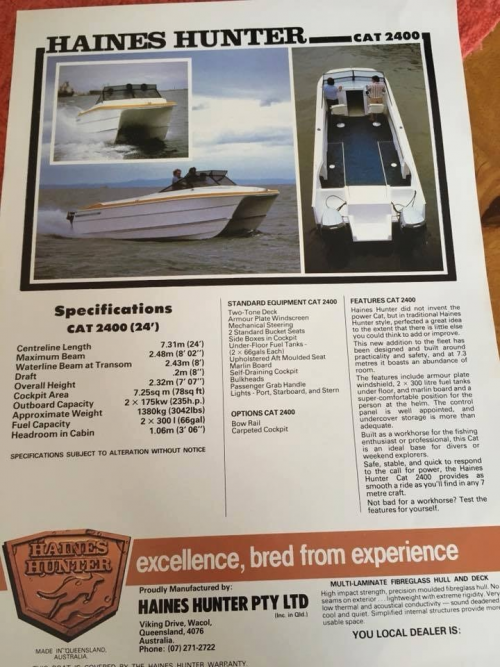
Many models and configurations evolved, including the “R” Runabout and “C” Cabin, as well as the ski-oriented 1600, 1800, and 2100SO's. There was also a cathedral-hulled 17’ bowrider and a 23’ twin-hulled catamaran.
-
1970: John and Garry took first and second place in the Sydney to Newcastle race. This happened one day after Gregory was born. John piloted a 23’ Formula, and Garry piloted a single outboard 1600 SO.
-
1973: The Haines Hunter company sold a majority shareholding to Robin Lowe, enticed by the promise of increased venture capital to expand the company. The Haines brothers remained shareholders and directors, continuing to run the operation.
-
1974: The Goodna factory was flooded during the great Brisbane floods of 1974, with water levels reaching 10m. Precious fibreglass moulds were recovered from treetops over 10 kilometres away.
-
1975: The factory moved to Wacol and experienced unprecedented growth
-
1975/76: Fire virtually destroyed the new Wacol factory.
-
Mid-1970s: All new models, including 445, 565, 600, 635, and 733, were released, reflecting the new metric length designations. The ever-popular 445F "Fisherman" centre console was created using John Snr's own-designed hull.
-
1979: John and Garry win the Pacific 1000. This was quoted as John’s favourite victory.
-
1980: John and Garry left the company after a "bitter legal dispute". The Haines family hasn't been involved with the Haines Hunter brand since.
-
1980s: The Haines Hunter brand went through ups and downs due to changes in management, takeovers, and shifts in ownership; however, design and new models such as the 490, 520, 550, 580 SL, SLR, and SLC evolved.
In New Zealand, local manufacturer Sea Craft Ltd m."ged with Miller Moyes Ltd. Miller Mnot been involvedmarine retail outlet in Auckland, becoming the outlet for Sea Craft fibreglass boats. At the same time, Sea Craft Boats acquired the “manufacturing rights” to the Australian Haines Hunter range of power boats, a completely stand-alone offshoot that continues to this day in the NZ domestic market with developing exports.
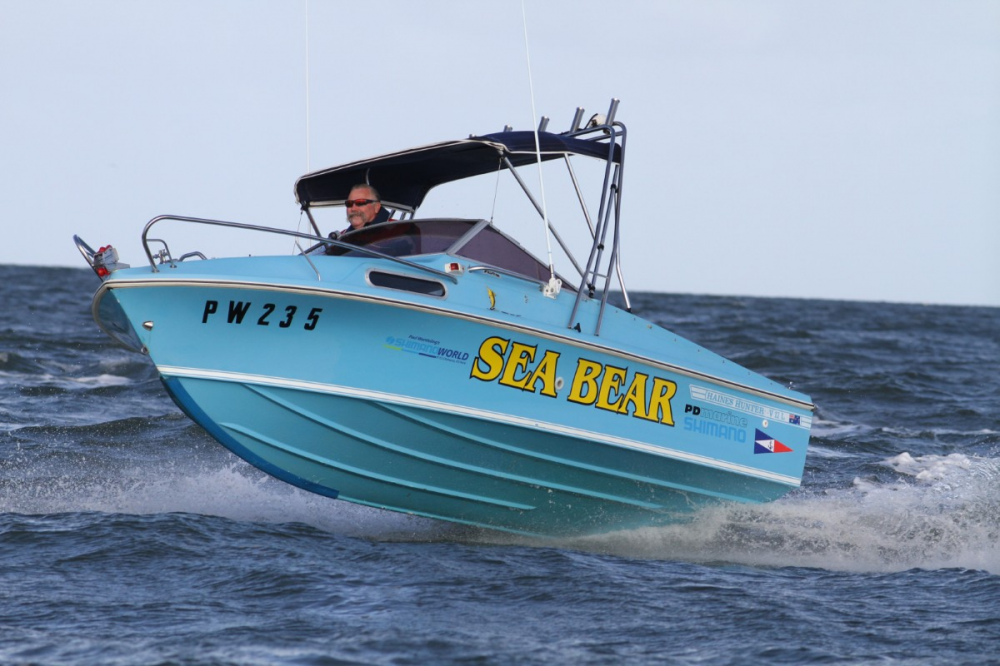
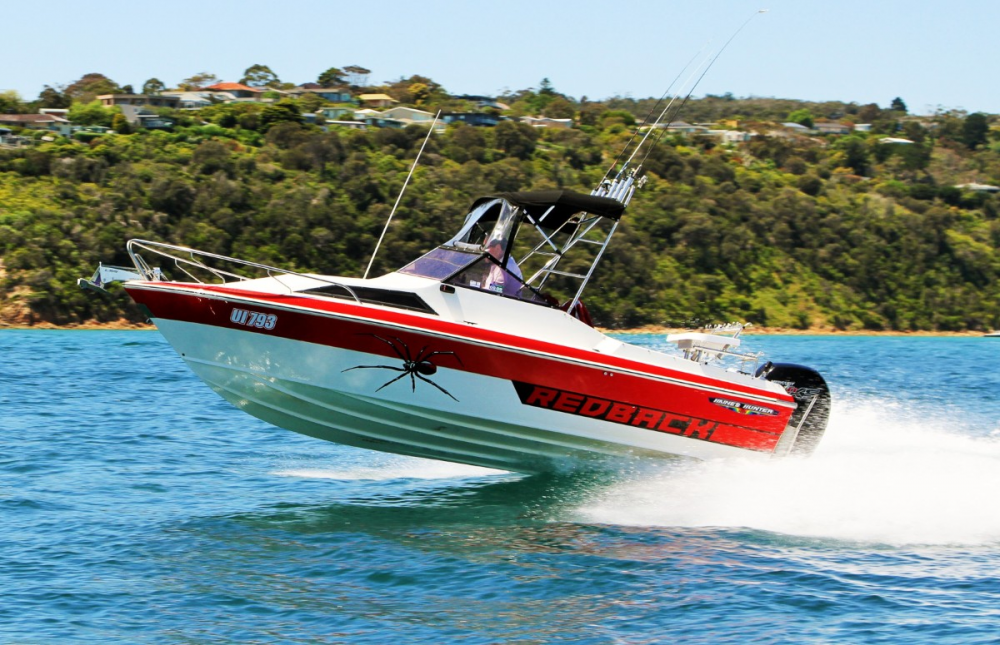
The image below is the author's fully restored 1985 model 580SL—in my opinion, one of the last great old-school Haines Hunters.
-
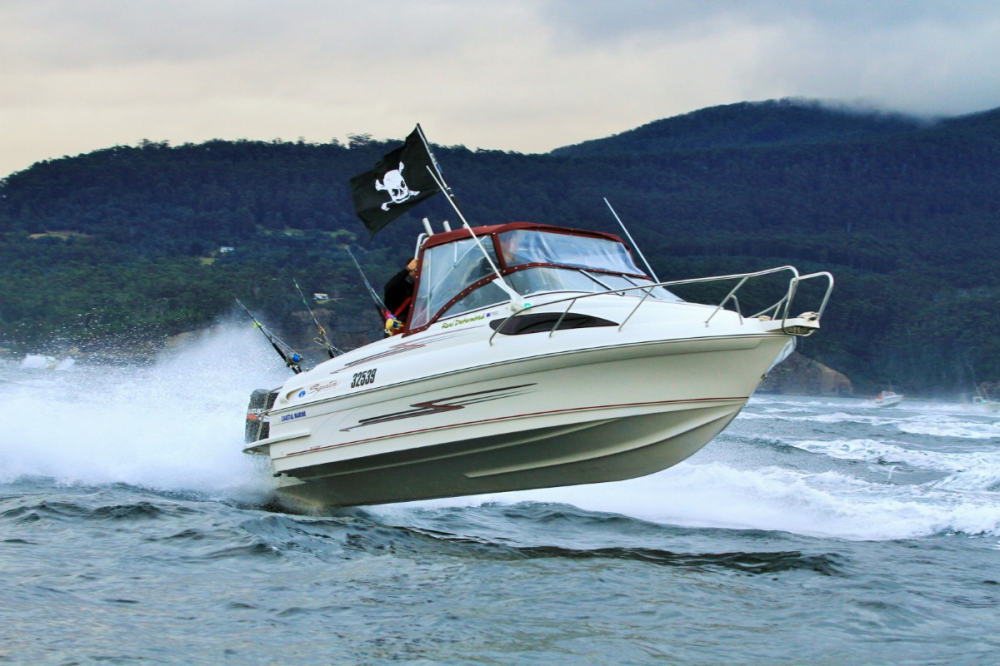
1984: John Haines Snr and family return to boat manufacturing with the Signature brand evolving into the Haines Group and eventually developing their patented SVDH (Signature Variable Deadrise Hull)
-
1990: OMC (Outboard Marine Corporation), purchased Haines Hunter. The designers changed, and new models emerged, such as the popular 560F and 580SF. The hulls were modified from the originals, often to incorporate pod and half-pod designs, and others were new designs. All models featured far greater use of internal deck space.
-
Early ’90s: Haines Hunter releases the updated 520, 620 and (in 1992) the 680SF. Whilst the world economy was just recovering from recession, the 680SF boats reflect the walkaround cabin design to a very accepting market and quickly gained great market success.
-
1996: The popular Haines Hunter 680 Encore is released with a freshly designed deck and transom shape.
-
2001: OMC collapsed worldwide, yet production continued under management in Australia.
-
2001: John Haber bought Haines Hunter. He released the Breeze range and a redesigned 680 named the Patriot.
-
2003: John Haines Snr was awarded the honour of member of the Order of Australia Medal, becoming John Sydney Haines AM. This is said to have been one of the proudest moments of his life.
-
2006: Haines Hunter built a new facility in Derrimut, Victoria, and closed the Queensland facility.
-
2006 to 2011: 2006 the Victorian Government inducted Haines Hunter into the "Victorian Manufacturing Hall of Fame." This recognition acknowledged the company's achievements in manufacturing excellence and reflected its commitment to producing high-quality boats using advanced techniques and materials.
-
24 Aug 2009: John Haines Snr, the founder of the iconic Haines Hunter and Signature boat brands, has died. John's sons Greg and John Jnr take over the management of the Haines Family Group.
Currently
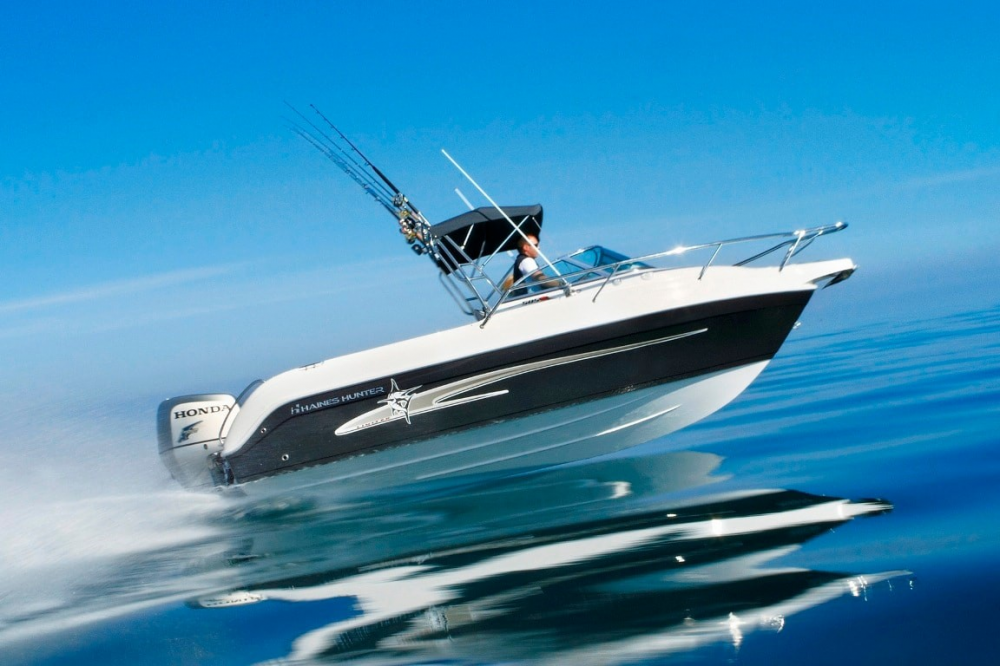
Haines Hunter continues making premium boats for boaters in Australia. They've expanded their lineup to include Enclosed, ProFish, Patriot, Offshore, Prowler, "R" Series, and Limited models. Their products, all of which are built at their Melbourne factory, have won many industry awards.
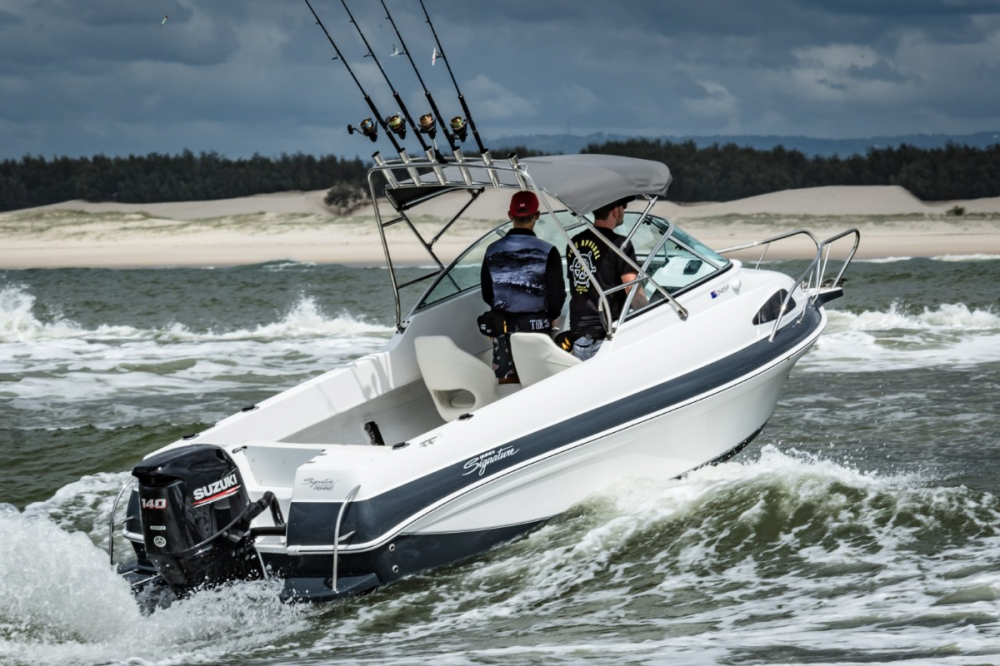
John Jnr and Greg have all but moved on from boat manufacturing. The Nichols Brothers, Cruise Craft Boats, now manufacture the Signature and Seafarer range. Greg Haines is now the Managing Director of Princess Yachts Australia, whilst brother John Jnr pursues other financial and family interests. Haines Hunter is now privately owned and operated in Victoria.
Ready to Set Sail?
Find your dream boat online at Only Boats, including a selection of Haines Hunter boats for sale. We have great deals on all boats for sale, including used boats and new boats. You can also check out our used boat buying guide.
If you're upgrading or planning to sell your boat, why not explore our expert guide on how to improve boat resale value. If you're planning to attend a boat show soon, we've also put together a detailed boat show buying guide that's perfect for first time buyers.
Smooth sailing starts with the right boat. We’re here to help you find it!
This information is based on a previous article written by John "Bear" Willis that previously appeared at TradeaBoat.com.au, now powered by Only Boats.
Getting boat finance sorted shouldn't be the hard part of boat ownership. Credit One has helped thousands of Australians get on the water, earning a reputation as Australia's best-reviewed finance broker with 3,000+ glowing Google reviews to show for it. See what customers have experienced by reading their Credit One reviews, or use the loan repayment calculator to work through your options.