
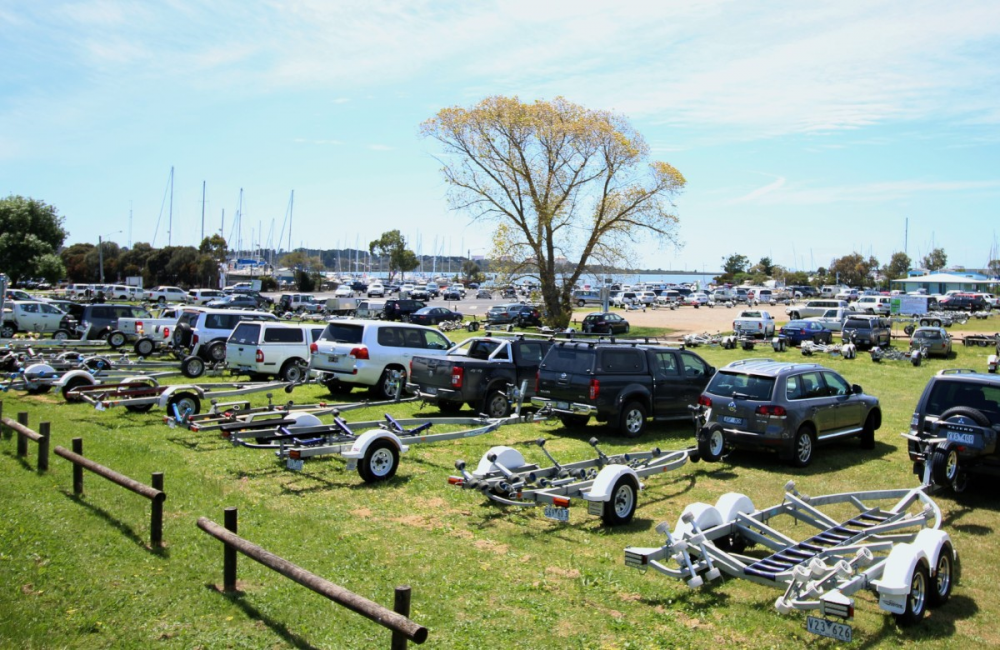
Types of Boat Trailers
Australians have entered a new realm of mobile trailerable boating. Not only are trailerable boats better equipped for short and long-range travel, but the information highway also entices us to be more mobile between ports and destinations by road.
The trailer is possibly the least considered yet most crucial part of any mobile boating package. After all, you're not going to get far without it!
Boat owners are responsible for knowing all the regulations. Many are finding out at their cost that their tow vehicles or boats are not compliant with local road rules regarding tow weights. If you have an accident when not in full compliance, your insurance, including public liability, can be void with disastrous implications.
But besides the legalities, a good trailer and efficient towing vehicle are the key to a safe and exciting boating experience. There's a big difference between towing a trailer around the corner to a local boat ramp a couple of times per year and setting up a complete unit to follow you around Australia, yet all of the principles are the same.
Getting it right the first time with types, materials, weights, brakes, and legalities will transform your trailer boating experience from a nightmare to a pleasure. It will also significantly increase your safety on the road and at the ramp, and that of everyone around you!
Where Do You Find The Right Boat Trailer?
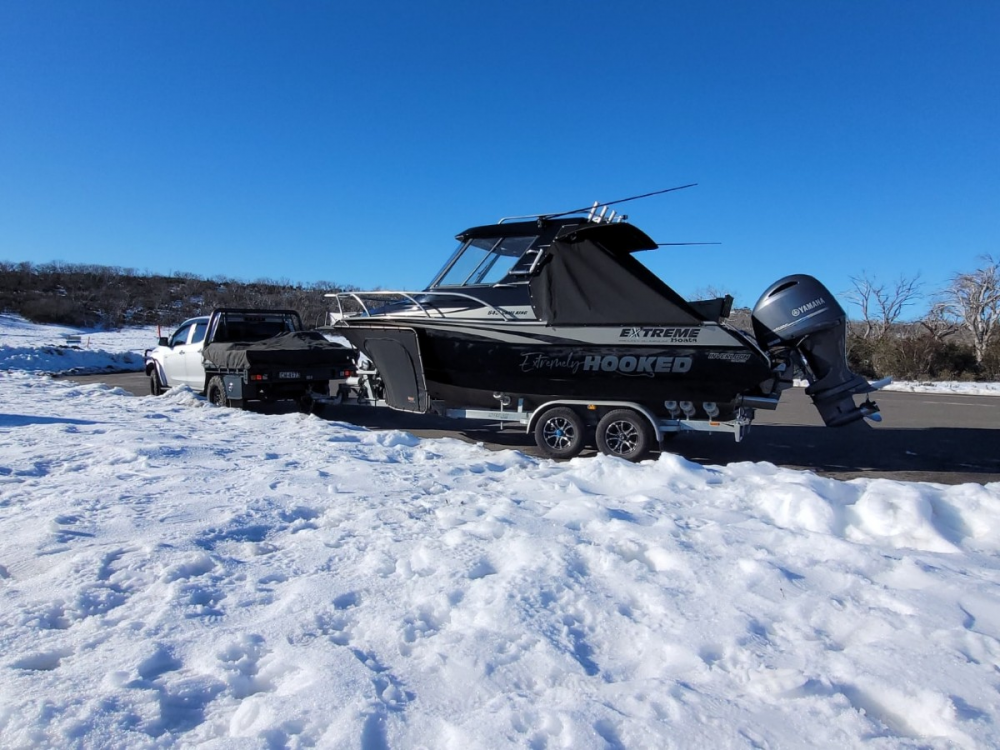
Mobile Australian boaties are often confronted with extreme road conditions. We can experience harsh climate changes—from ice and snow one minute to extreme heat the next—and all in one day! There’s the weld-shattering rumble of massive distances on corrugated roads; there’s potholes, bulldust, mud, sand, and torrential rain to contend with. Even the blacktop has its dangers. While efficient braking and safe loading can be lifesaving, the heat can melt the tyres right into the bitumen and boil the bearings.
Boat buyers are confronted by a plethora of brands, sizes, makes, models, materials, engine types, horsepower, accessories, and equipment. Often, the trailer is the last consideration—but it shouldn’t be. That bright, shiny new trailer may have looked the part in the dealership or seemed suitable for a private purchase, yet in practice, it may lead you to despair.
In this competitive world of boat sales, it is not unusual that packages will be presented with a minimal alternative to reduce the cost. Hence, all too regularly, boat and trailer combination weight capacities are so close to the maximum carrying weight (ATM) that once you fill the fuel tank and chuck in the tackle box, you have reached, or exceeded, your loading limits.
Yet if approached correctly, that same dealer may well be your best friend. No dealership or purchaser needs a bad relationship, so take the time to thoroughly discuss the many trailer options. There’s drive on - drive off, roller, Teflon, aluminium, galvanised, single or tandem, brake type, construction material, spare wheel and carrier; right down to tie downs and retrieval device, all due for consideration.
There can be many thousands of dollars difference between a bottom-of-the-range trailer and a premium presentation offering confident and dependable service. When buying second-hand, there are the obvious wear and tear considerations, but there may also be problems with changing legalities. In fact, while some trailers are still registered and may be legally transferred, some are illegal to tow behind modern vehicles.
Smaller boat packages are terrific for extended travel in remote destinations, but they create huge demands on trailer construction and weight capacities. Yet larger trailerable boats are often subject to long distances on the blacktop, often creating different problems. I am very pleased to see that both sectors seem mostly more educated nowadays, spending the time and their hard-earned dollars on premium trailers. Let’s face it: legislation and regulation have played a huge part in us all lifting our games as well!
The Right Trailer For Your Boating Needs
Boat trailers were once primitive affairs, sometimes made from galvanised pipe and other workshop scraps. Common types were mostly very simple affairs with basic keel rollers and a pair of carpeted side “bunks” to spread the load and keep it horizontal. They gave rise to all manner of often wacky inventions and various options intended to make life easier at the ramp. However, the early 1970s saw the introduction of the first fully rollered “drive on” style trailers, and our boating lives changed dramatically. Some of our most prominent manufacturers are still using these same basic designs, but as I said, that was the early 1970’s and life has progressed so much further today.
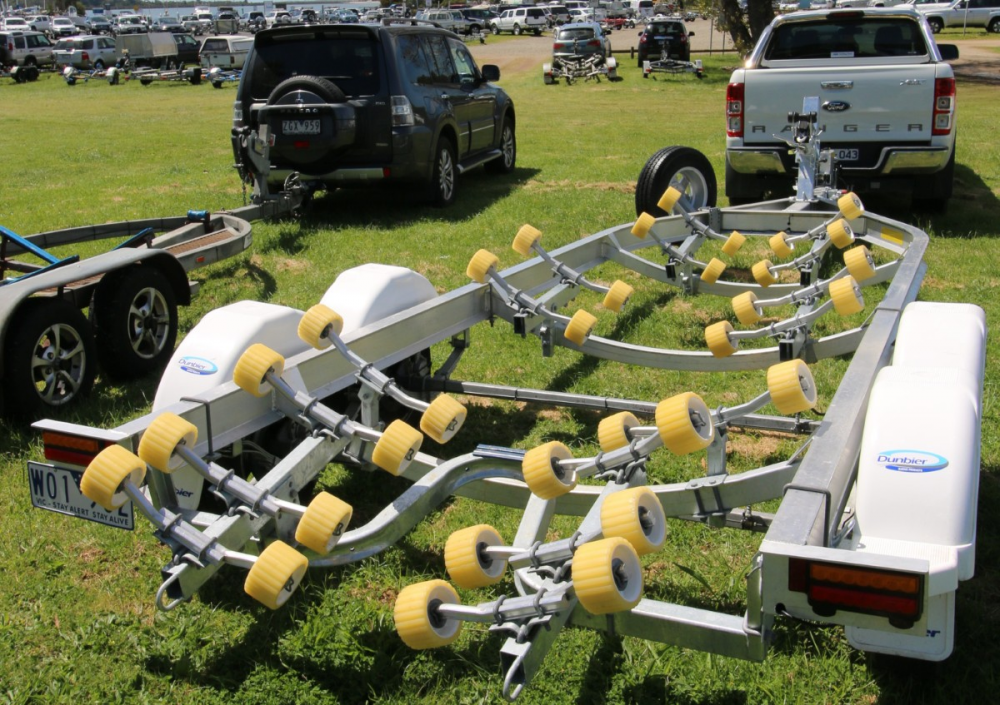
Materials
Stainless Steel
Over the years, some keen engineers have built a few stainless steel boat trailers, but mostly in backyard or non-mainstream workshops. Stainless steel has a couple of major pitfalls for trailer manufacturing. First, the raw material is expensive and the total weight is very heavy. Second, stainless steel welding can be particularly brittle unless perfectly performed.
Plastic/Synthetic Boat Trailers
Numerous attempts have been and still are being made to manufacture and market plastic boat trailers. While they mostly appear to be a great idea, with terrific strength and supposedly long lifespans, they haven’t been greatly accepted by the mainstream boating community. I’d say watch this space, as it seems a positive direction for the future.
Steel Boat Trailers
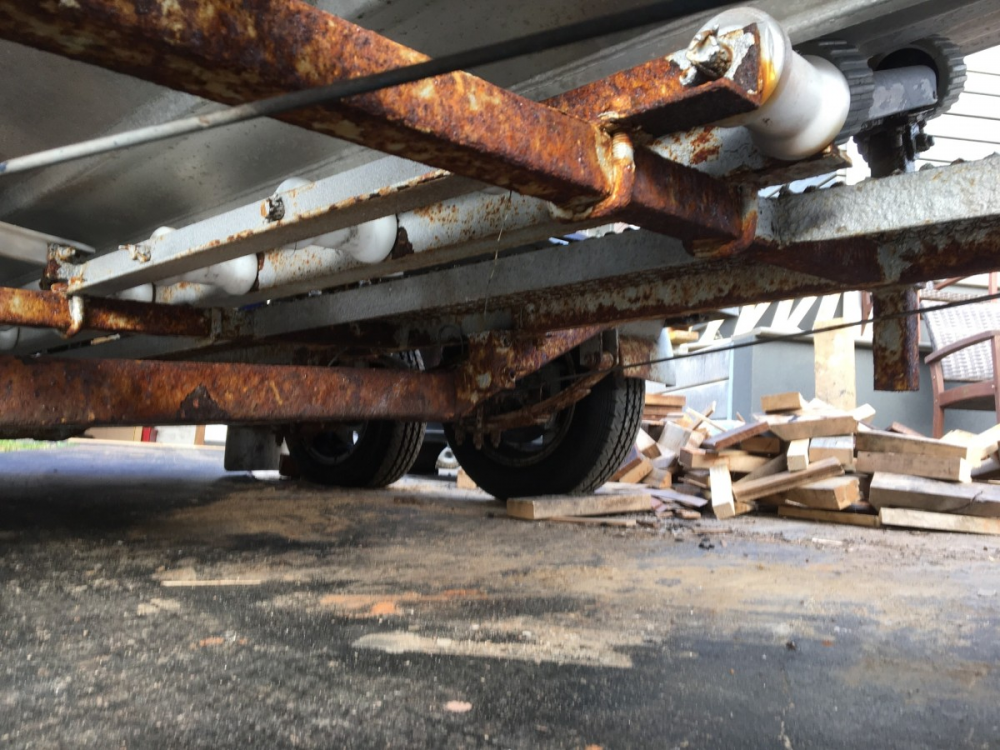
Traditionally, the leading material for boat trailer construction has been steel. Steel is the cheapest of the available construction materials and has the highest strength-to-weight ratio. Steel is easily welded, rolled, and manufactured and has the highest appeal among production trailer manufacturers. Many inland sports boat trailers are painted or powder-coated for rust protection and last many years in freshwater use. Hot dip galvanising certainly provides the premium rust protection, yet it adds considerably to production costs. Salt water is a strong corrosive and needs to be washed off all trailers as soon as possible after immersion for launch or retrieval, particularly steel trailers. Steel doesn’t have strong reactive characteristics to differing materials, as does aluminium, making the assembly process relatively cheap and easy.
Aluminium Boat Trailers
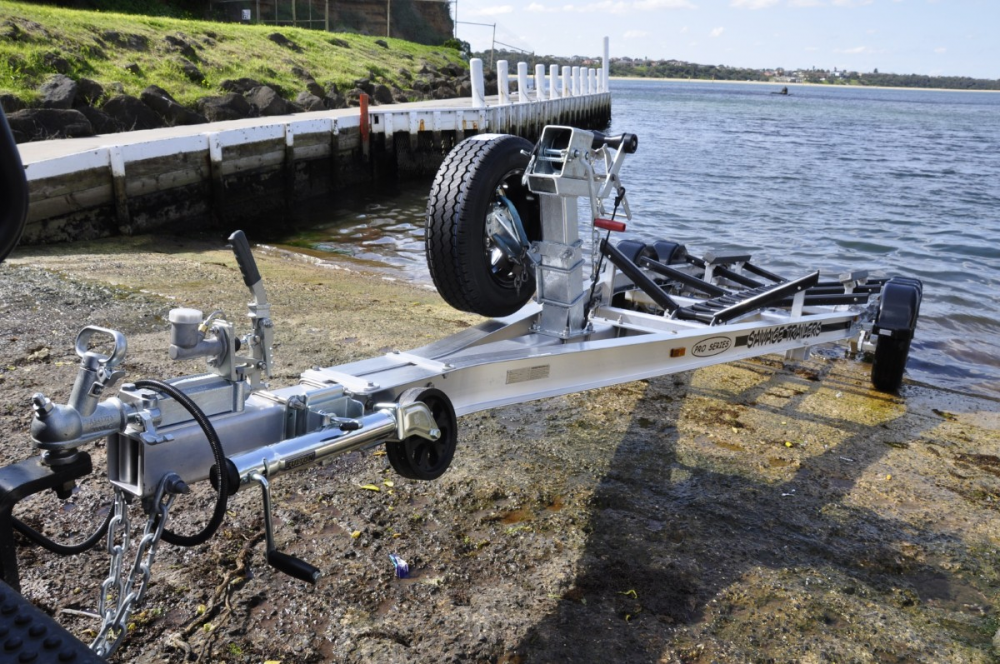
Aluminium trailers have been constructed for many years, but traditionally by small custom shops. Recent trends have seen a massive increase in their popularity, and rightfully so. Aluminium is lighter than steel, is strong, and has excellent corrosion resistance if appropriately manufactured.
Aluminium doesn’t have the tensile strength of steel and hence requires larger or thicker sections to carry the same weight. “I” beam chassis have become very popular in both alloy and steel trailers as the extrusion is inherently strong by nature and doesn’t hold the internal water that causes corrosion. Yet aluminium suffers from “fatigue”, particularly in stress points, welds and joins, so great care must be taken in design and construction to ensure overall strength. Generally, all welded sections should be fully gusseted for maximum strength. Many aluminium trailer manufacturers bolt their trailers together instead of welding to allow flex in the construction, reducing the tendency for fatigue.
Any tinnie owner will know that aluminium has quite strong reactive characteristics. It suffers greatly from corrosion (commonly called electrolysis). This reaction occurs when metals and materials come in contact with aluminium, causing an electrical exchange that oxidises and destroys the metal. We are currently seeing some quite horrid examples of trailers being built with non-conducive materials such as mild steel, zinc-plated or galvanised bolts, U-bolts, and even cross members coming into direct contact without any form of isolation. The lifespan of these trailers will be greatly diminished.
However, there are some excellent examples of aluminium manufacture, some incorporating real innovation. A properly constructed alloy trailer usually weighs around a third less than the galvanised steel alternative and can last the life of the boat if properly maintained. Like all premium products, they are more expensive than alternatives.
Which Style of Trailer is Right For My Boat?
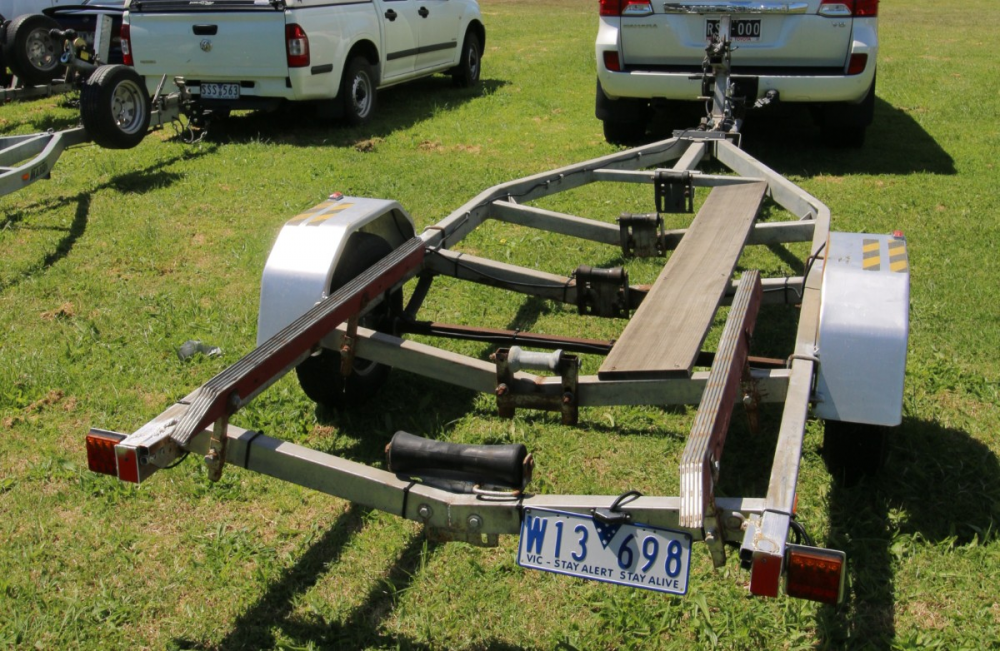
Boat trailers have come a long way since the trials and tribulations of early designs. It wasn’t all that long ago that most boat trailers were basic keel roller designs with a couple of side adjustments to stop the boat rolling. Launch and retrieval was an exhausting hit and miss affair that not only damaged many boats and people, but probably was the catalyst for more than a few divorces as well!
Roller Trailers
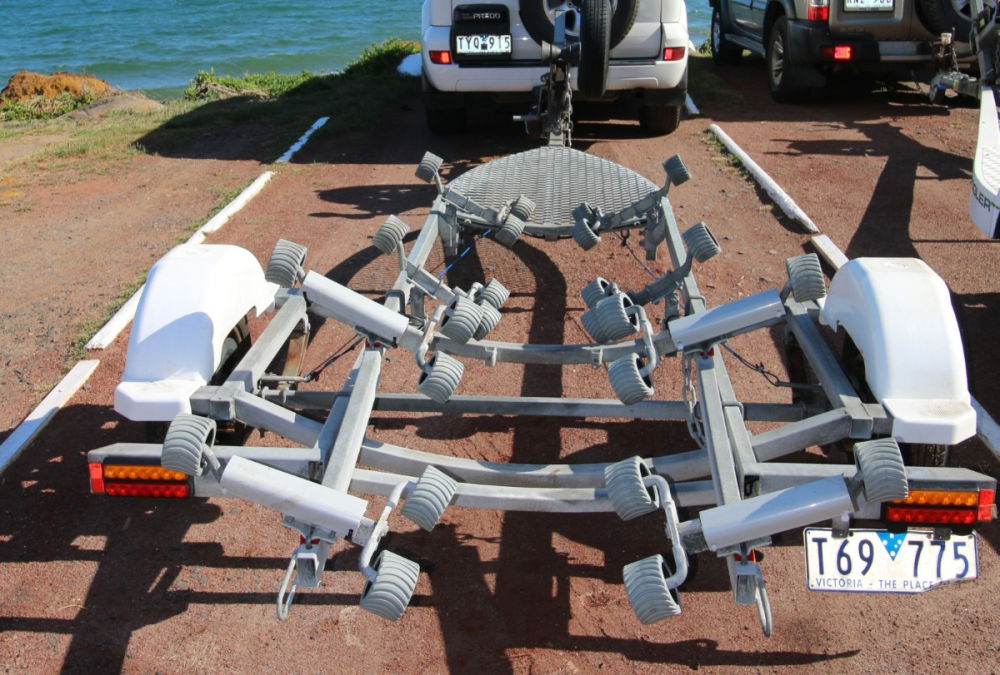
Thankfully, necessity is the mother of invention, particularly around fishing and boating. The mid-1970s saw the invention of the multi-roller trailer. These often complicated affairs did, and still do, come in many forms, with some having drive-on capability and others not. The multi-roller trailer is still in vogue, with most preferring the full cradle design for full drive-on ability. There are many combination trailers using skids, rollers, and bunk combinations; however, the advent of the multi-roller trailer dramatically changed the way we all went boating.
Multi-roller trailers are suitable for fibreglass and most plate aluminium hulls; however, they are not available for the common “pressed” aluminium boats that require full keel support. Ask your local dealer or even the boat's manufacturer for their preference if in any doubt. Note also that fitting a boat to a non-manufacturer-recommended trailer will most often render hull warranties void.
Warning! It is frustrating that many trailer manufacturers still secure their rollers to the axles using galvanised or often just zinc or nickel-plated split pins. These require constant surveillance and maintenance, as when they give way, the sharp edges of the protruding axle will gouge your precious hull. A handy hint is to replace them with stainless steel alternatives and inspect and maintain them regularly.
“Teflon” Trailers
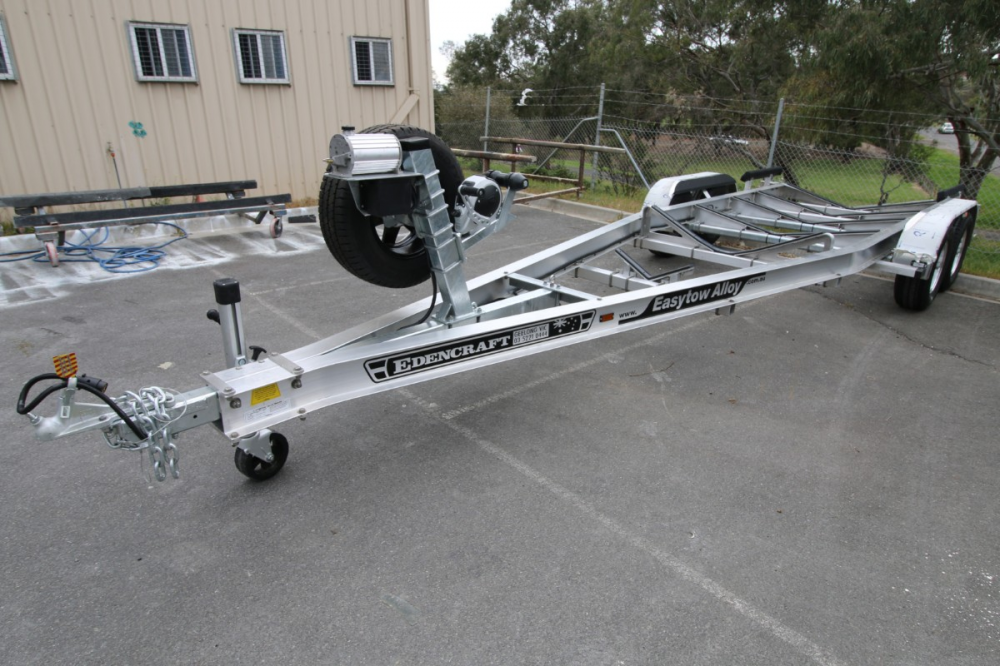
“Teflon” is the commonly used term for trailer skids; however, it is totally incorrect. The material is a very slippery yet tough and hard-wearing high-density polyethylene. The polyethylene skids are bolted or pop-riveted to a cradle or the trailer frame, allowing strong support with slippery surfaces, directing the hull into the trailer's centre.
Skids are used in many combination trailers, with some relying totally on “V”-shaped cradles for support, eliminating all moving parts. Other, more popular modern trailers provide a full carriage of keel rollers, with skids directing the hull to the keel and adjustable, longitudinal “bunks” providing side support parallel with the chines and strakes.
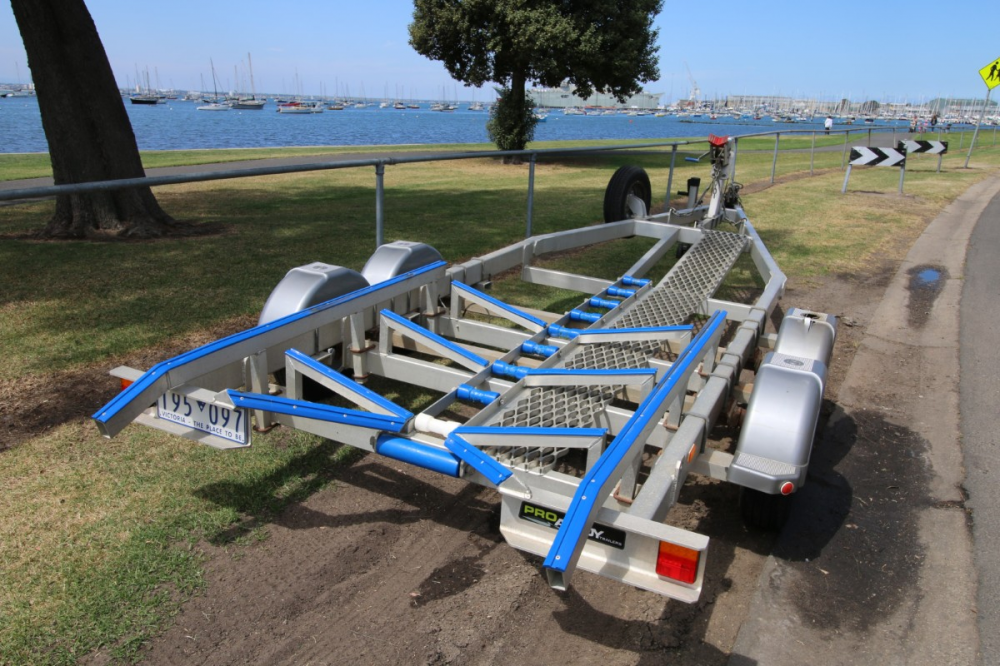
In the author's opinion, skid-style trailers are undoubtedly the easiest style of drive-on trailer and also require the least maintenance due to the limited number of moving parts. Variations are available for both fibreglass and aluminium hulls in many configurations.
Bunk Trailers
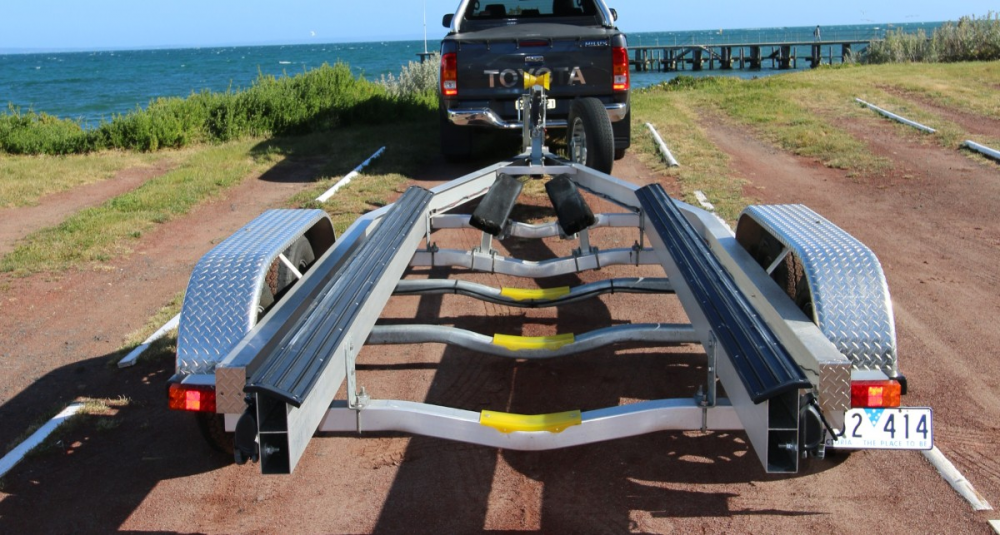
“Bunk” is generally an American term for a longitudinal plank support frame on a boat trailer. They are most common in imported and ski boat trailers, but are also gaining some support in the general Australian market. They are probably the simplest form of boat trailer with their long planks running parallel with the chines and strakes. The bunks are usually covered with a non-sticking marine carpet surface or polyethylene. There can be simply a pair of “bunks centred down towards the keel supporting the whole hull, or multiple bunks in other versions offering greater hull support and spreading the load. We generally find that the more a load is distributed, the easier it is to launch and retrieve.
The bunks are generally fitted to a swivel device at each end, allowing easy fitting and adjustment to suit most hull types. Bunk trailers typically do not provide full keel support and hence are not suited to most pressed aluminium boats.
Final Thoughts - Which Boat Trailer For You?
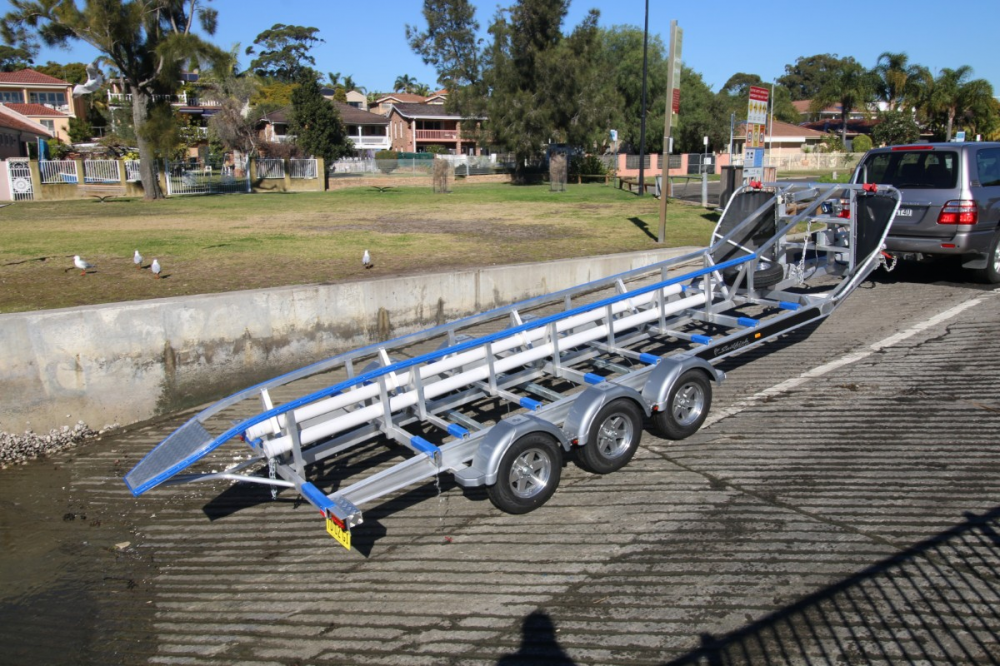
Everyone has differing ideas on boat trailer design, and many hulls require different combinations. However, the strongest point we can make is to consider the trailer, which will make your boating the safest and easiest option available, and that also provides value for your boating dollar.
We believe that in today’s day and age of busy boat ramps, a good drive-on capable trailer is imperative, but learning how to use it properly is an absolute necessity. There are some terrific accessories for self-launching that are fodder for a further article. Still, please consider safety as the number one criterion on the road and the water. And if you are trying to save money, from my experience, the only reason that 99% of people sell second-hand trailers is because they have gone past their use-by date! Quote, “The poor pay twice!”
Launch Day Made Easy
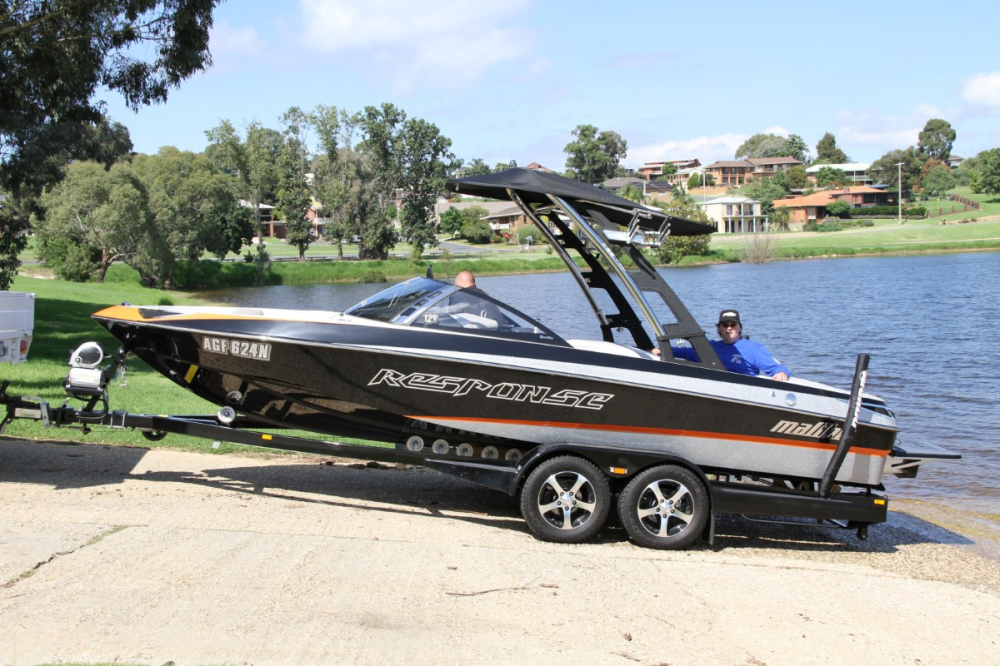
Looking for the perfect trailer to get your boat to the water? We have a great selection of boat trailers for sale here at Only Boats, and we're ready to help you find exactly what you need.
Beyond trailers, we have great deals on all boats for sale, including used boats and new boats. You can also check out our used boat buying guide.
If you're upgrading or planning to sell your boat, why not explore our expert guide on how to improve boat resale value. If you plan to attend a boat show soon, we've also compiled a detailed boat show buying guide that's perfect for first-time buyers.
Smooth sailing starts with the right boat. We’re here to help you find it!
Getting boat finance sorted shouldn't be the hard part of boat ownership. Credit One has helped thousands of Australians get on the water, earning a reputation as Australia's best-reviewed finance broker with 3,000+ glowing Google reviews to show for it. See what customers have experienced by reading their Credit One reviews, or use the loan repayment calculator to work through your options.